Introduction: BP profits double as Iran war drives up energy prices
Good morning, and welcome to our rolling coverage of business, the financial markets and the world economy.
The Iran war has helped BP to double its profits in the first quarter of this year, its latest financial results show.
The oil major has just reported that it made a profit of nearly $3.2bn in the first three months of 2026, on its favoured ‘underlying replacement cost' earnings measure.
That's higher than City analysts had predicted, with BP – which was hit by a shareholder rebellion last week – giving some of the credit to an “exceptional†contribution from its oil trading operations.
These quarterly profits are up from $1.54bn in the fourth quarter of 2025, and $1.38bn in the first quarter of last year.
Q1 2026 includes the surge in oil and gas prices in March, after the war began at the end of February, disrupting energy supplies from the region.
BP's new CEO, Meg O'Neill, acknowledges the impact of the Middlle East conflict, saying the company is working in an “environment of conflict and complexityâ€.
O'Neill says BP is “working with customers and governments to get fuel where it's needed†– at a time when fears of jet fuel shortages are growing.
She adds:
double quotation mark Overall, our business continues to run well. This was another quarter of strong operational and financial delivery, and we made further progress towards our 2027 targets. We had high plant reliability, high refining availability and increased production in the Gulf of America and at bpx Energy, our US onshore business – keeping production levels steady despite the ongoing disruption.
The surge in energy prices is worrying central banks, many of whom are setting interest rates this week.
Overnight, the Bank of Japan left borrowing costs unchanged, but three policymakers did break ranks and vote for a hike….
The agenda
-
9am BST: ECB survey of Consumer Inflation Expectations in the eurozone (timing corrected)
-
2pm BST: US house price data: S&P/Case-Shiller Home Price MoM
-
3pm BST: US consumer confidence data
Key events
Please turn on JavaScript to use this feature
Rachel Reeves also pledged to do everything possible to help people renting their homes in the private sector.
After the Guardian reported this morning that the chancellor is considering a one-year freeze on rent increases, she told MPs:
double quotation mark “I will do everything in my power and use every lever we have to bear down on the cost of living, including for people in the private rented sector.â€
Bloomberg are reporting that Saudi Aramco is suspending liquefied petroleum gas shipments next month after damage to its main export facility in late February – just before the Iran war began – cut off supplies of the fuel.
The state producer informed buyers recently that shipments from the Juaymah LPG facility would continue to be suspended through May, “according to people familiar with the matterâ€.
Shipments from Juaymah were halted in the week before the US-Israeli bombing of Irann began, after a part of the delivery system carrying propane and butane was structurally damaged.
Juaymah is on the Saudi coastline in the Gulf, so shipments would be disrupted anyway by the closure of the strait of Hormuz….
Reeves: Important to keep windfall tax on oil and gas companies
Chancellor Rachel Reeves is pledging to stick with the current windfall tax on oil and gas companies in the UK.
Asked about BP's surge in profits, at Treasury questions in Parliament today, Reeves says the Energy Profits Levy allows the government to tax some of the profits made by energy giants during the Iran war.
The chancellor tells MPs:
double quotation mark The oil and gas sector will play an important part in our energy mix for many years to come, and we need to support them, as we are for example through tiebacks.But it is important that the energy profits levy remains in place for now. During this conflict we will be able to capture the profits made in the UK through the windfall tax.
The Conservatives and Reform oppose this tax, and this would simply mean even higher profits for the oil and gas industry.
The Energy Profits Levy is 38%, lifting the headline rate of tax on upstream oil and gas activities to 78%. It only applies to a company's earnings within the UK, though, and doesn't catch profits made in the rest of the world.
GM: Tariffs will cost us $500m less after Supreme Court ruling
US carmaker GM has lifted its profit forecasts, after Donald Trump's Supreme Court defeat over his sweeping tariffs.
GM has lifted its guidance for adjusted EBIT (earnings before interest and tax) this year, after “a favorable adjustment†of approximately $500m resulting from the ruling that tariffs claimed under the International Emergency Economic Powers Act were unlawful.
GM now expects gross tariff costs of $2.5bn to $3.5bn in 2026, down from the original estimate of $3.0bn to $4.0bn.
Earlier this month, the Trump administration began accepting applications from businesses seeking refunds for more than $166bn in tariffs, after the supreme court ruled in February that the president had no legal authority to impose them.
NatWest chair: we believe deeply in UK’s long-term strengths
NatWest's AGM is up and running again, after that earlier disruption, and chair Rick Haythornthwaite is telling investors that the UK's economy still has “long-term†strengths.
Haythornthwaite says:
double quotation mark Over recent years, uncertainty and volatility have been a persistent feature of our operating environment. Growth is present, but it is uneven. It varies by sector, by region and by levels of financial resilience, and it demands discipline and selectivity. What has been striking over the past year is that behaviours have often proved more resilient than sentiment. Across households and businesses, people continue to plan, invest and adapt, even in the face of uncertainty, but with greater discipline and a renewed focus on returns and value for money.We should be clear: there are near-term challenges. Recent global events mean pressures have elevated for many households and businesses. From a Board perspective, maintaining a longer‑term view is essential, and we believe deeply in the long-term strengths of the UK.
NatWest AGM disrupted
Over in Edinburgh, NatWest bank has begun its annual meeting with shareholders, and then briskly adjourned it.
There was some shouting, and then some singing, audible on the live feed from the AGM before it was suspended – for 15 minutes, although it's been longer now….
Campaign groups had already called for protest votes against the bank's chair, Rick Haythornthwaite, today, amid accusation of ‘climate backtracking' by the bank.
Reuters are reporting that climate protesters disrupted the meeting, according to a spokesperson.
BP's profit surge in the first quarter of this year probably won't last, due to the disruption to energy infrastructure since the Iran war began, predicts Kathleen Brooks, research director at XTB.
After BP reported results that “smashed expectationsâ€, Brooks says:
double quotation mark In fairness, an oil major that makes bags of money during an energy price shock should not be a surprise. Its share price was higher by 3%, after it reported profits of $3.8bn, driven by strong oil trading revenue.This is a good start for new CEO Meg O'Neil, but the question is, will it last? The answer is most likely no, as the company also noted flat production levels due to disruption at its sites in the Middle East.
UK grocery inflation slows
UK grocery inflation has slowed this month, new data shows, despite the disruption caused by the Iran war.
Worldpanel by Numerator has reported that like-for-like grocery inflation fell to 3.8% in the four weeks to 19 April, which is the lowest rate in a year.
Prices are rising fastest in markets such as medicines & treatments, fresh unprocessed meat and fresh unprocessed fish, and are falling fastest in chilled butter & spreads, sugar confectionery and household paper.
The survey found that shoppers are seeking out deals due to concerns about rising prices – spending on promoted items rose by 7.8% year on year.
Fraser McKevitt, head of retail and consumer insight at Worldpanel by Numerator, explains:
double quotation mark “Concerns about the impact of the Middle East conflict on prices of everyday goods are front of mind for British households. Already feeling the squeeze at the petrol pump, shoppers are responding by turning to special offers in growing numbers when buying groceries.â€
Bloomberg: Japanese crude oil supertanker attempting to sail through strait of Hormuz
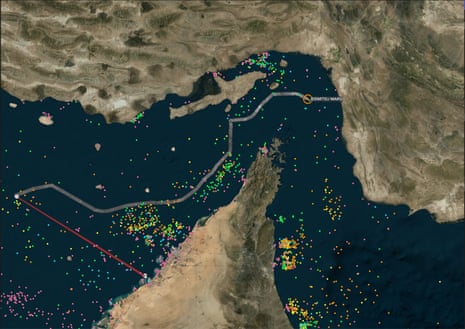
A laden Japan-linked supertanker appears to sailing through the Strait of Hormuz, in what may be the first attempt by an oil carrier from the country to leave the Gulf since the Iran war began.
Bloomberg has the details:
double quotation mark The Idemitsu Maru began sailing late Monday toward the strait from northwest of Abu Dhabi, where it had idled for more than a week, tracking data show.It appeared to turn north toward Iran's Qeshm and Larak Islands, then sail past Larak toward the eastern side of the strait. It's carrying 2 million barrels of crude loaded from Saudi Arabia's Juaymah terminal in early March.
At the start of April a liquefied natural gas tanker co-owned by the Japanese company Mitsui OSK Lines sailed through the strait.
Tax Justice UK: Profiteering companies should face additional excess profits taxes
The UK government should ‘get a grip' on energy companies, banks or weapons makers who make excessive profits from the Iran war, and tax those earnings, says Caitlin Boswell, deputy director at Tax Justice UK.
double quotation mark “It is outrageous that households are getting hammered on all sides from rising bills and prices of essentials, while companies like BP are doubling their profits, all from the same crisis. The government needs to get a grip on the situation to stop companies from callous profiteering, whether in the energy sector, banking or defense.We need the government to remain steadfast in maintaining the windfall tax on oil and gas companies, and apply additional excess profits taxes on those profiting from the crisis. That way, the government can recoup all unearned profits to help people get through the affordability crisis and make the UK more resilient to future shocks.â€