Confusion abounds over Iran’s response to US proposal to end war
Various news agencies and Iranian state media have reported that Tehran has responded “negatively†to the US proposal to end the war, but there are contradictory statements over whether it has rejected it outright.
Reuters news agency, citing a senior Iranian official, reported that Tehran's initial response to the proposal was “not positive†but that it was still reviewing it.
That is at odds with a report by the Iranian state-owned Press TV, which quoted a senior political security official saying Tehran has rejected the proposal, while putting forward its own conditions to end the war.
Meanwhile, Iran's semi-official Fars news agency, citing a “knowledgable sourceâ€, reported that Tehran will not accept a ceasefire and believes it would not be “logical†to enter talks.
The US has shared a 15-point list of expectations with Iran via Pakistan, according to reports, with Donald Trump saying Iran wanted a deal “so badly†to end the war.
Several news agencies, including Reuters, Associated Press and AFP, have reported Pakistani officials saying the country has delivered the proposal to Iran and was awaiting a response.
So far, Iran and Pakistan have not officially made any comments on the proposal, but there are suggestions that negotiations could happen as early as this weekend. Two senior Trump administration officials told CNN that talks are under way for US vice president JD Vance to travel to Pakistan or potentially Turkey, but cautioned that the timing of the expected trip is fluid.
Key events
Please turn on JavaScript to use this feature
Saeed Shah
Iran has sent a warning to the United States that it will carpet bomb its own territory to attack any American troops landing there, according to diplomats from a third country who passed on the threat to Washington.
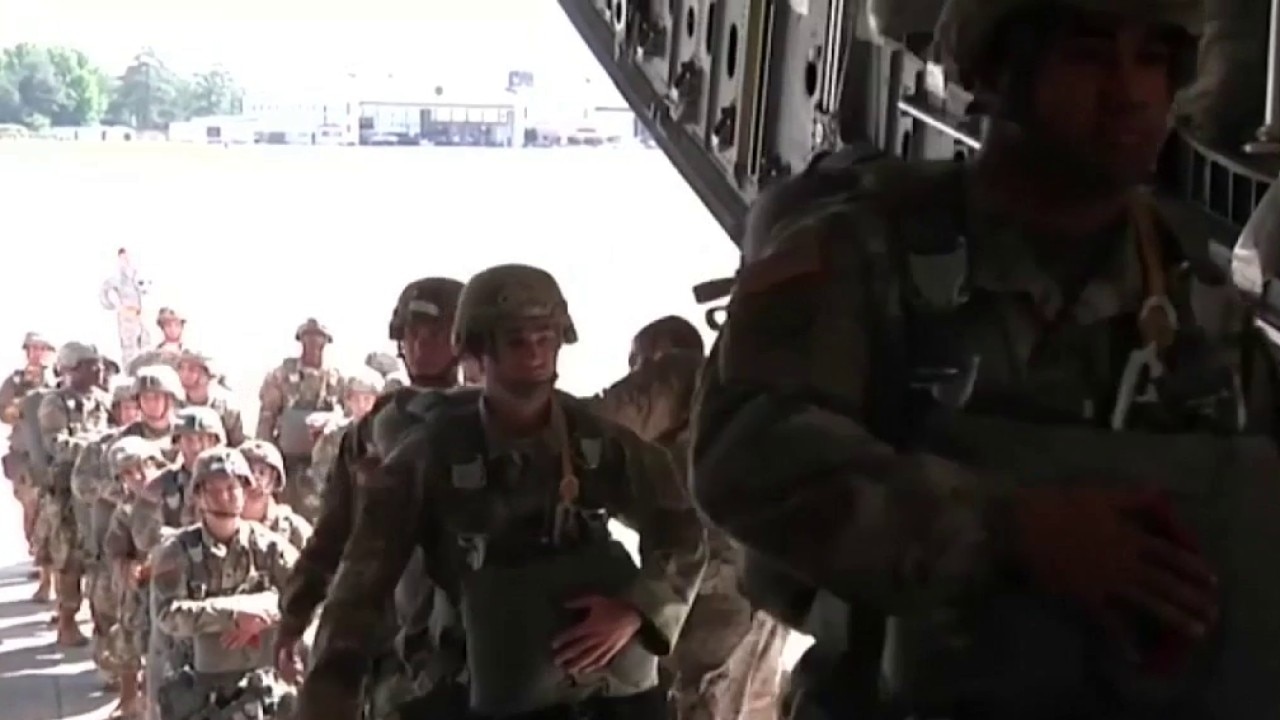
The US is sending thousands of ground troops to the Middle East, which could be deployed to forcibly lift the Iranian blockade of the strait of Hormuz, which is choking global oil and gas supplies from the Gulf. Kharg Island, a tiny island in the Persian Gulf, is thought by analysts to be a likely target for invasion.
Tehran is willing to bomb its own infrastructure at Kharg Island, a crucial export terminal for Iranian oil, or elsewhere, to target American soldiers there. Iran believes that, as any landing party will have limited missile defences available, this would mean a bloodbath for US forces.
“Iran says that they don't care that they will have to blow up their own territory,†a diplomat involved told The Guardian. “They will do it to kill American soldiers.â€
The presence of Americans on Iranian soil would cross a new red line for Iran. The US military could aim to seize territory, in order to make Iran open the strait. Aside from Kharg, options include deploying the forces along Iran's coastline or taking one of the other small islands.
Hezbollah chief Naim Qassem said Wednesday that negotiating with Israel under fire would amount to “surrender†for Lebanon, as Israel launched new strikes and Hezbollah said it was targeting Israeli troops.
UN secretary-general Antonio Guterres warned that “the Gaza model must not be replicated in Lebanonâ€, a comparison previously drawn by Israel officials talking about operations in Lebanon.
“Hezbollah must stop launching attacks into Israel. And Israel must stop its military operations and strikes in Lebanon, which are hitting civilians the hardest,†Guterres told reporters at the United Nations.

William Christou
Iranian officials expressed initial disapproval of a US ceasefire plan on Wednesday, even as intermediaries suggested direct talks between the two could start as early as this weekend.
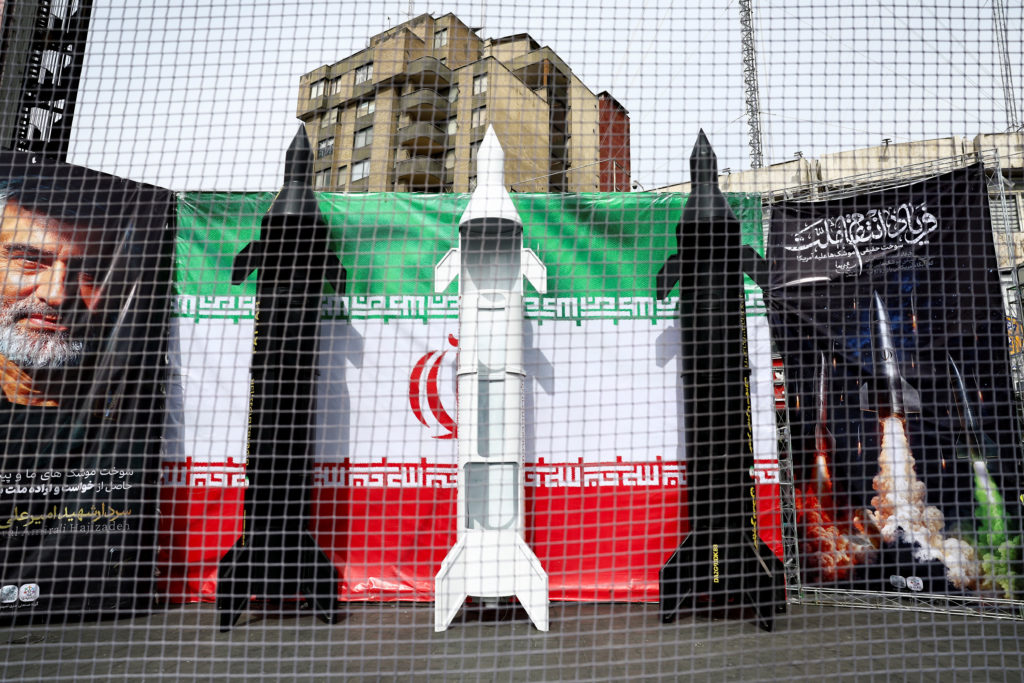
Representatives from Pakistan who reportedly delivered the US plan to Iran told the Associated Press that it was a 15-point proposal that would include sanctions relief for Iran, dismantling Iran's nuclear programme, restricting its use of missiles and reopening the strait of Hormuz, a chokepoint for about 20% of the world's oil.
An Egyptian official also suggested it would restrict Iran's support for armed groups across the Middle East. Some of these proposals proved to be intractable sticking points in negotiations before the war began.
A senior Iranian official speaking to Al Jazeera described it as “extremely maximalist and unreasonableâ€, while other officials said the country was still reviewing the proposal, despite viewing it as too favourable to US demands.
Iran had previously scoffed at the diplomatic effort and mocked the US president, Donald Trump, claiming Washington was negotiating with itself. Overnight and on Wednesday, Tehran launched even more attacks on Israel and Gulf countries, including an attack that sparked a huge fire at Kuwait international airport, while Israel continued its bombardment of Iran.
France's armed forces chief Fabien Mandon will hold a technical meeting by video conference “soon†with army chiefs from countries keen to play role in restoring maritime navigation in the strait of Hormuz, a French military official said on Wednesday.
The meeting would be unrelated to the United States approach to the issue and would remain in a framework of a defensive posture, the official said.
France has repeatedly said it would not take part in operations until hostilities had calmed in the region.
UN chief says Middle East war is ‘out of control’ and says Lebanon cannot become ‘next Gaza’
The war in the Middle East is “out of control,†UN secretary-general Antonio Guterres said Wednesday, warning of more human and economic pain the longer fighting goes on.
“The conflict has broken past the limits even leaders thought imaginable,†he told reporters.
“The world is staring down the barrel of a wider war, a rising tide of human suffering, and a deeper global economic shock. This has gone too far.â€
“The Gaza model must not be replicated in Lebanon,†Guterres added, urging Hezbollah to stop launching attacks at Israel and an end to Israeli military operations in Lebanon, which he said are hitting civilians the hardest.
Jazeera Airways shifted operations to Saudi Arabia's Al Qaisumah airport on 11 March after Kuwait's airspace was closed due to the Iran crisis, the airline's CEO said on Wednesday.
The CEO added that Jazeera Airways is currently flying to seven countries from Saudi Arabia, with flights recognised as departing from Kuwait, and said there is no indication when Kuwait's airspace will reopen.
Confusion abounds over Iran’s response to US proposal to end war
Various news agencies and Iranian state media have reported that Tehran has responded “negatively†to the US proposal to end the war, but there are contradictory statements over whether it has rejected it outright.
Reuters news agency, citing a senior Iranian official, reported that Tehran's initial response to the proposal was “not positive†but that it was still reviewing it.
That is at odds with a report by the Iranian state-owned Press TV, which quoted a senior political security official saying Tehran has rejected the proposal, while putting forward its own conditions to end the war.
Meanwhile, Iran's semi-official Fars news agency, citing a “knowledgable sourceâ€, reported that Tehran will not accept a ceasefire and believes it would not be “logical†to enter talks.
The US has shared a 15-point list of expectations with Iran via Pakistan, according to reports, with Donald Trump saying Iran wanted a deal “so badly†to end the war.
Several news agencies, including Reuters, Associated Press and AFP, have reported Pakistani officials saying the country has delivered the proposal to Iran and was awaiting a response.
So far, Iran and Pakistan have not officially made any comments on the proposal, but there are suggestions that negotiations could happen as early as this weekend. Two senior Trump administration officials told CNN that talks are under way for US vice president JD Vance to travel to Pakistan or potentially Turkey, but cautioned that the timing of the expected trip is fluid.
According to Press TV, the Iranian official outlined five conditions under which Tehran will agree to end the war.
They include:
-
An end to “aggression and assassinationsâ€.
-
“Concrete†guarantees preventing the reoccurrence of war against Iran.
-
Payment for war damage and reparations.
-
End of war on Iran and against “all resistance groups†across the Middle East.
-
Recognition of Iran's sovereignty over the strait of Hormuz.
Iran rejects US proposal and views it as ‘excessive’ – state media
Press TV, the Iranian state broadcaster's English-language outlet, has quoted a senior political security official as saying that Tehran has reviewed and rejected the proposal put forward by the US to end the war.
The official said any cessation of hostilities will only occur on Iran's own terms and timeline, adding that the country will not allow Donald Trump to dictate when the conflict will end.
“Iran will end the war when it decides to do so and when its own conditions are met,†the official was quoted as saying, adding that Tehran considers the US proposal as “excessiveâ€.
The official noted previous attempts at talks and accused the US of having no genuine intention to engage in meaningful dialogue, claiming the current offer for negotiations was a ruse to heighten tensions.
UK to host talks on mission to reopen Hormuz – AFP
Britain and France will chair military talks this week involving about 30 nations to form a coalition to reopen the strait of Hormuz, a UK defence official told AFP Wednesday.
Britain, France, Germany, Italy, Japan and the Netherlands said last week they were ready “to contribute to appropriate efforts to ensure safe passage through the Strait of Hormuzâ€. A further 24 countries then endorsed this statement.
The “expectation is that there will be a further meeting, military-to-military, the chiefs of defence staff of the wider group that has now signed … later this week,†the official told AFP.
The chief of the defence staff of Britain's armed forces, Richard Knighton, chaired a meeting of the initial six countries plus Canada on Sunday, The Times reported.
The British defence official told AFP other countries would also now be potentially invited.

Lorenzo Tondo
Israel's parliament has advanced a contentious bill to impose the death penalty on Palestinians convicted of terrorism to its final vote, after the Knesset's national security committee approved the measure on Tuesday.
The legislation, initiated by the far-right Otzma Yehudit party led by the national security minister, Itamar Ben-Gvir, has drawn sharp criticism from opponents who warn it would mark a significant escalation in Israel's penal policy. Members of Otzma Yehudit have worn noose-shaped pins in support of the bill.
Under the proposals, those sentenced to death would be held in a separate facility with no visits except from authorised personnel, with legal consultations conducted only by video link. Executions would be carried out within 90 days of sentencing.
The measure allows courts to impose the death penalty without a request from prosecutors, and without requiring unanimity, instead permitting a simple majority decision. Military courts in the occupied West Bank would also be empowered to hand down death sentences, with the defence minister able to submit an opinion.
For Palestinians under occupation, the bill would close off avenues for appeal or clemency, while prisoners tried inside Israel could see their sentences commuted to life imprisonment.
The committee made some amendments to the bill, which passed its first vote, Israel's public broadcaster KAN reported, adding that executions would be carried out through hanging.
Following on from those comments from Grossi (see post 13.04), the IAEA chief said the talks are expected to cover missiles, Iran-aligned militias and security guarantees for Tehran.
“This time, there will also be missiles, militias allied with the Islamic Republic, security guarantees for Iran on the table,†he told Corriere della Sera, adding:
double quotation mark There are alternative diplomatic plans that would allow both a solution that says that at the moment there will be no more enrichment because the political, military, and trust situation does not allow it; and, in principle, to reassess the issue in five or ten years' time.
Summary of developments so far
-
Iran has scoffed at reports that the US has put forward a ceasefire deal to bring an end to the conflict in the Middle East, insisting Americans were only negotiating with themselves. It follows reports that the Trump administration sent a 15-point ceasefire plan to Iran through Pakistan.
-
Donald Trump has maintained that talks to end the war are ongoing, claiming yesterday that Iran wanted a deal “so badlyâ€. Iran, however, had already dismissed the claim as “fake news†a day earlier.
-
Despite the denials, Pakistani officials told several news agencies that Iran has received the proposal, which largely touched on sanctions relief, a rollback of Iran's nuclear programme, restrictions on its ballistic missile programme and access for shipping through the strait of Hormuz.
-
The head of the International Atomic Energy Agency said there might be talks between Iran and the US in Pakistan in the coming days. “I think there could be talks this weekend in Islamabad,†Rafael Grossi told Italian newspaper Corriere della Sera, without elaborating.
-
Iran said “non-hostile†ships may pass safely through the strait of Hormuz, according to reports, as the the vital shipping lane has been effectively closed to tankers since the US-Israeli military campaign began more than three weeks ago. Thailand confirmed one of its crude oil tankers has passed safely through the narrow waterway after successful negotiations with Iran and Oman.
-
Mohammad Bagher Ghalibaf, the speaker of Iran's parliament, said Tehran was “closely monitoring all US movements in the region†following reports that Washington will deploy additional troops to the Middle East. The Associated Press reported that more than 1,000 soldiers are being deployed to the region to join the 50,000 soldiers already there. The New York Times, citing sources, also reported that 2,000 troops could be sent.
-
Elsewhere, Spain's prime minister, Pedro Sanchez, has accused Benjamin Netanyahu of seeking to “inflict the same level of damage and destruction†on Lebanon as Israeli forces had wrought on Gaza. He warned that the Middle East war presented a “far worse†scenario than the invasion of Iraq in 2003.