This article was written by guest contributor Diane Anastasio.
Last spring, I traveled to Albuquerque, New Mexico, to visit friends and check out the local queer country dance scene. The sun set neon pink behind rows of adobe houses as roadrunners darted through the alleyways. Tucked into the back room of the Albuquerque Social Club, the city's oldest gay bar, a motley crew of queers danced together on a beat-up wooden floor. Cut-off denim shorts with Dr. Martens met suede boots and glistening gay rodeo belt buckles. The bar was dim and dripping with sweat, holding decades of queer connection in its walls.
Advanced dancers hollered dance steps to newcomers along the edges of the room while strangers clasped hands and spun each other in circles, rainbows of hankies swinging from their back pockets. A trans flag billowed in the corner under a string of colorful twinkle lights. Elders danced with young folks as classic country poured from the speakers. Late in the night, some rowdy regulars formed a line for the shadow dance, snaking across the floor in one long train and grinding to Tracy Chapman. I'd never seen anything more simultaneously sexy and wholesome in my life.
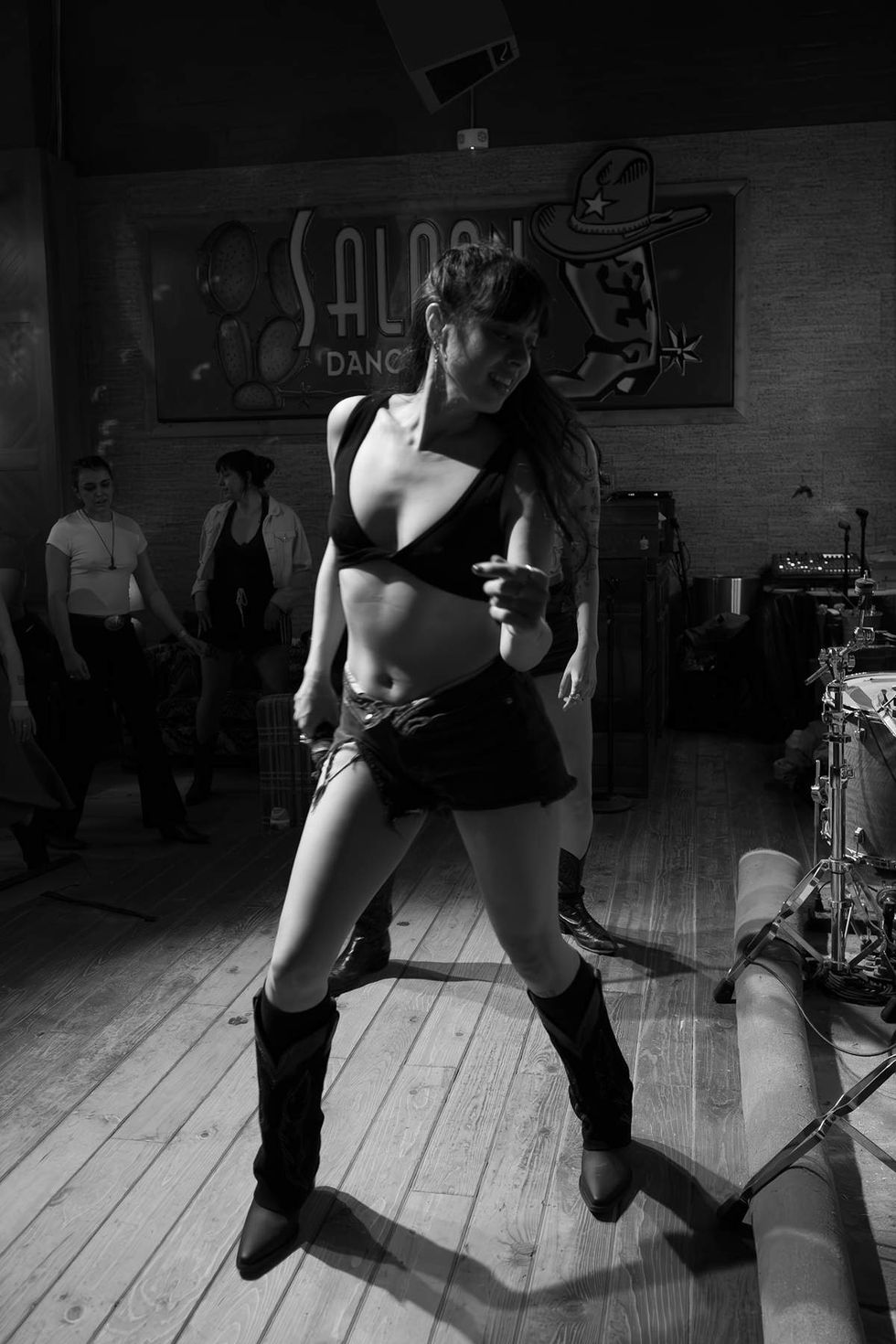 Sugarfoot onstage at Buck Wild in BrooklynHugh Hobbs
Queer country-western dancing — particularly line dancing and two-step — has been thriving in the United States for half a century. Today, it's experiencing a vibrant resurgence, fueled by steamy social media reels, a shifting country music landscape, and a widespread hunger for in-person connection, evident in the sultry shadow dance worm I witnessed in New Mexico. Where I live in Southern California, you can find a queer line dancing event almost every night of the week. This wasn't the case just a few years ago.
During the pandemic, iconic gay country bar Oil Can Harry's closed, forcing Los Angeles's queer country-western dance community to improvise. No stranger to pandemics and skilled in resilience, queer folks figured out how to fill the void. Sean Monaghan, a founder of Stud Country, held dance pop-ups in parking lots, and Abi Hamilton, a founder of Bootleg Dance who danced at OCH three nights a week for 20 years until it closed, recalls that the community would “dance in the dirt at the park once a week in our masks just to experience some form of connection.†By the time Stud Country started taking off and appealing to a wider audience in 2023, people were itching to move together again. “Coming out of the pandemic, people have been desperate for IRL connection, especially connection that isn't centered around hard partying,†says San Francisco dancer Janaye Pohl. “Queer line dancing fills that gap.â€
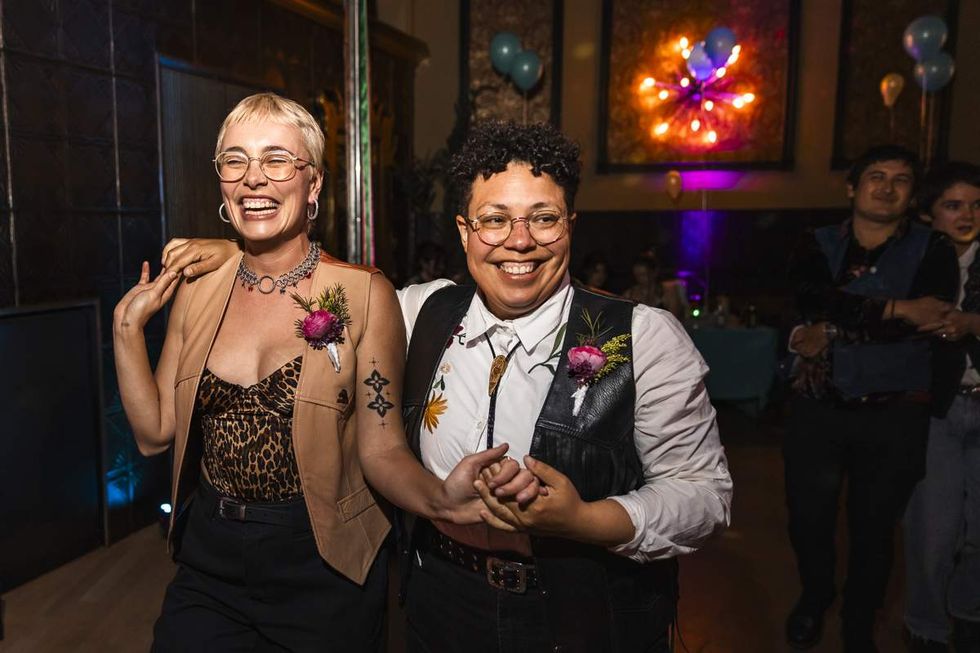 Janaye Pohl with dance partner Sonj at the San Francisco Stud Country Spring FormalLizzy Montana Myers/courtesy Stud Country
At Club Bahia, Stud Country's longtime home base in Los Angeles, the dance floor pulsed with sequins, mesh, motorcycle boots, and off-kilter queer takes on cowboy couture. DJs moved seamlessly between Alan Jackson and Troye Sivan, crystallizing queer expansiveness in the form of a playlist. For many newcomers, the initial experience of attending Stud Country at that time was like a jolt. “I never knew line dancing could be so hot and cool, and could have such a tight-knit community,†says Sugarfoot, who now runs a queer line dance night called Buck Wild in Brooklyn. “I knew I wanted to learn all the dances so I could be on the floor the whole time, so I could dance with everyone.â€
Queer country-western dance has deep roots. In the late 1970s and '80s, bars like the Brazos River Bottom in Houston and Oil Can Harry's became vital gathering spaces, particularly during the AIDS crisis. Partner dancing allowed queer people to dance freely with each other outside the critical gaze of the straight eye. In its early days, OCH famously had a spy hole, which was used to detect incoming police raids and alert the dancers, who would switch partners to avoid detainment.
In the early 1990s, driven in part by the cultural force of Billy Ray Cyrus's “Achy Breaky Heart,†line dancing exploded in popularity. Unlike partner dancing, it was easy to pick up and standardize because of its common language. You could jump in, learn a few steps in a sequence, and become a pro by the end of the night. That accessibility remains central to its current appeal, which spans the globe. From Minneapolis to Atlanta to Paris, new queer hubs sprout up every week in barns, backyards, and community centers. You can drop into a queer line dance night almost anywhere and find your people.
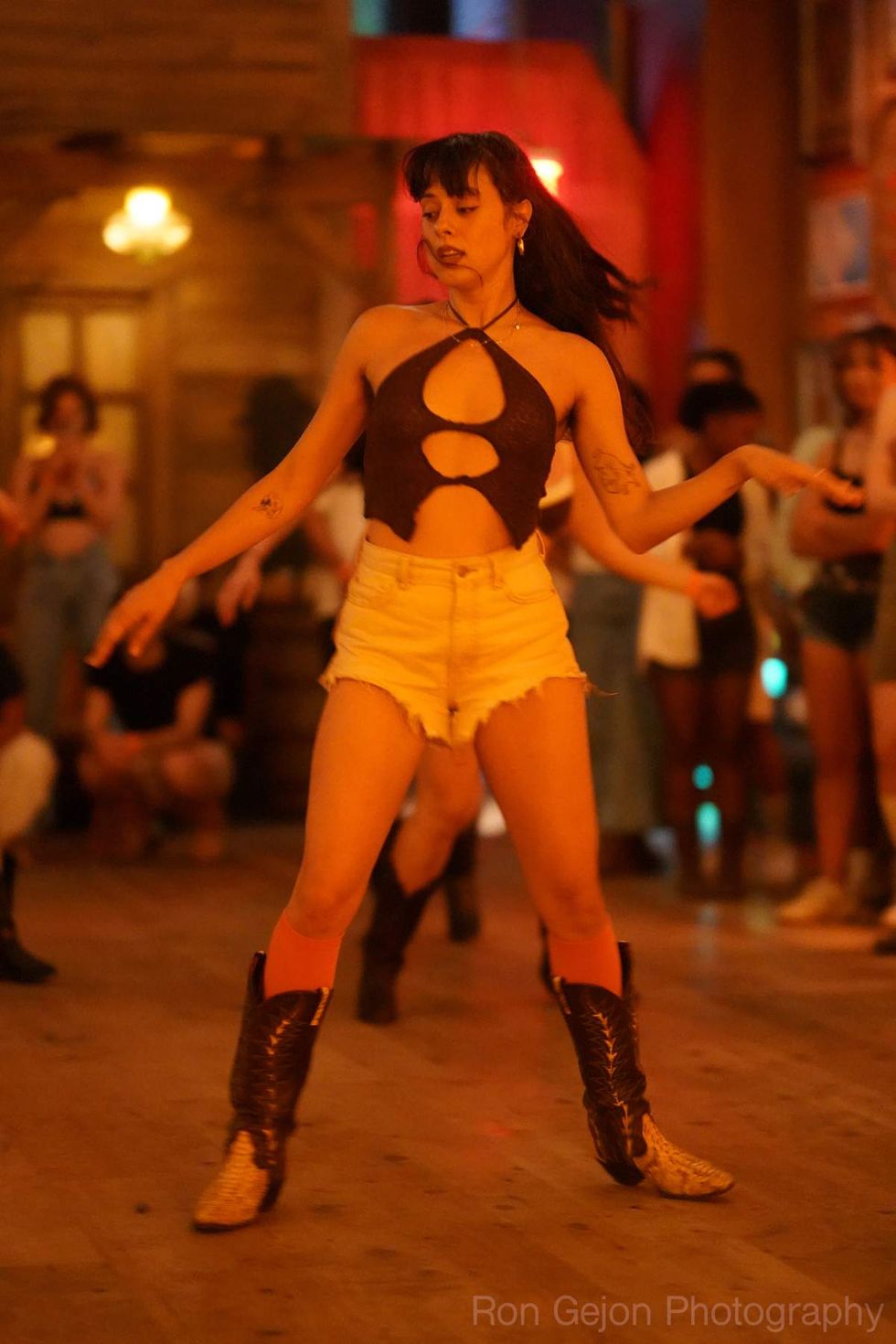 Sugarfoot at Buck Wild in BrooklynRon Gejon Photography
And once you find your people, you might never want to leave. For many dancers, especially those who grew up in country culture, the return to line dancing through a queer lens can be deeply healing. “It does feel a bit like going to church,†says Pohl. “Seeing some of the same folks, meeting and greeting new people, and then getting out on the floor to perform your ritual. It's been nice to reclaim that type of feeling in a queer space versus in the evangelical church I grew up in.â€
Queering country culture is part of the allure. “Yes, this is a song about beer and a girl and a truck, and I'm gonna dance cunty and queer as fuck to it, and there's nothing you can do about it,†boasts Sugarfoot. It's this freedom of expression that is so intoxicating to so many queer country converts. In partner dances like the two-step, roles are fluid; queer dancers routinely swap lead and follow, dissolving gender binaries embedded in the form. “It challenges societal norms about gender expectations and sexuality, and I'm proud of the way queer line dancing has taken something that was historically straight, white, and cis and made it something that belongs to all of us,†says Hamilton.
Ed West of Neon Rainbows in Austin grew up in the hill country honky-tonks of Texas. “I think queer people claiming any space for themselves is a political act,†he says. “Under a regime that wants to shrink our rights and try to eradicate trans people from public life, the time to take back dance floors is now and more important than ever.†For some groups, the politics of line dancing extends beyond collective joy. Groups like Bootleg Dance in Los Angeles and the Outlaws in New Mexico collaborate with mutual aid organizations and community initiatives, folding activism into the social fabric of the dance floor.
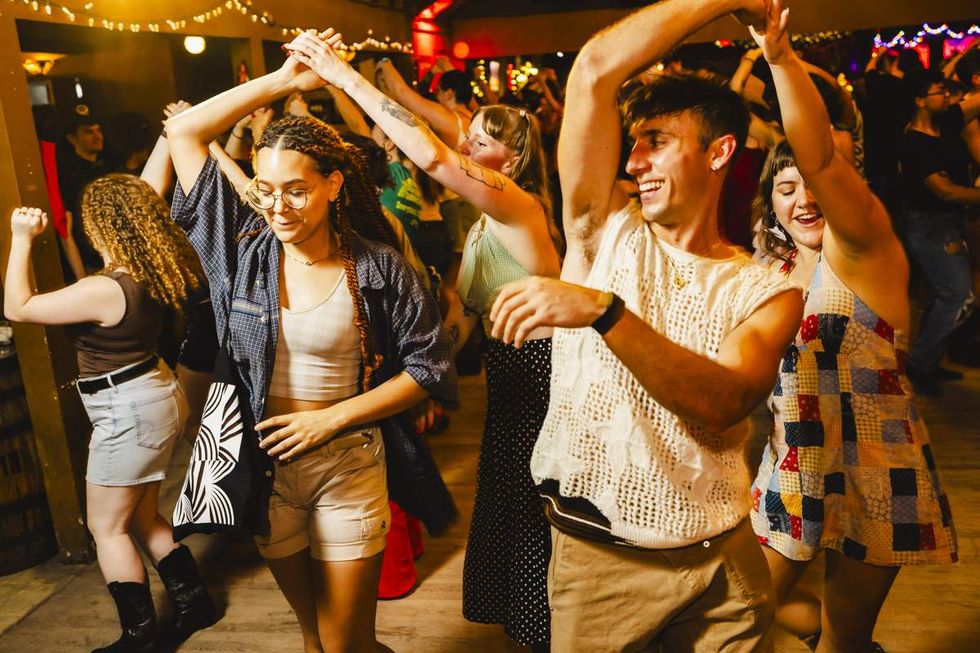 Partner dancing at Neon Rainbows in AustinErika Rich
So what makes a country dance space queer? “Besides a bunch of gay people?†Hamilton laughs. “It's the openness. A sense of safety and freedom to express myself how I want to, without fear of judgment.†It's the “colorful gay lights,†says Sugarfoot, jokingly — those same lights that lit my path as strangers twirled me across the dance floor in New Mexico. Sugarfoot, too, kept returning to the concept of safety: “You can be as queer as you want without fear of someone discriminating against that.â€
Behind the boots, belt buckles, and smutty outfits, queer country-western dancing offers a way for LGBTQ+ people to move together in sync, to be safe in being ourselves, and to participate in a vast lineage of queer love and attraction on the dance floor. Every time we line up to dance “The Wolf†or “Country Girl Shake,†we dance in the bootsteps of stag dance loggers and New York City drag ball dilettantes — just a bit more visibly.
Whether or not this current craze endures with such heightened enthusiasm doesn't really matter. Because queer people will never stop dancing. History proves that we will always find a way back to an intimate embrace and shared rhythm. So next time you find yourself in nearly any city, seek out the local queer line dance night and join in on the sexy shadow dance train. Or at least, ask a stranger to dance. Chances are high that you'll have a beautiful time, immersed in the radical potential of joyous queer movement “because,†as Sugarfoot cheekily notes, “let's face it — queer people are more fun.â€
This article is part of The Advocate's May-June 2026 print issue, which hits newsstands May 26. Support queer media and subscribe — or download the issue through Apple News+, Zinio, Nook, or PressReader.