More than 20 years ago, the Peabody Museum of Archaeology and Ethnology got a call from a photographer named Roger Marshutz.Â
He wondered if the museum would like more than 3,000 photos he'd taken in Pusan, South Korea, at the end of the Korean War.Â
Not sure what to make of the inquiry, Rubie Watson, the first Howells Director of the Peabody Museum, reached out to Carter Eckert, then the Yoon Se Young Professor of Korean History at Harvard University.Â
“He explained what an extraordinarily valuable contribution this would be to the Harvard Museums, as well as to Korean studies at Harvard,†said Sean Kim, co-author of “The Forgotten Home Front: Roger Marshutz's Photographs of Pusan, South Korea, 1952-1954.â€
The book makes Marshutz's photos available in a new format and shares context on what has been called America's “forgotten war.â€Â
“Roger Marshutz is one of the best photographers you've probably never heard of,†said Kim's co-author, Ilisa Barbash, curator of visual anthropology at the Peabody Museum.
Despite 37,000 Americans losing their lives in the Korean War, Barbash said, “It's called forgotten because it's sandwiched temporally between World War II and the Vietnam War, and received a lot less attention, ultimately, in the history books.â€Â
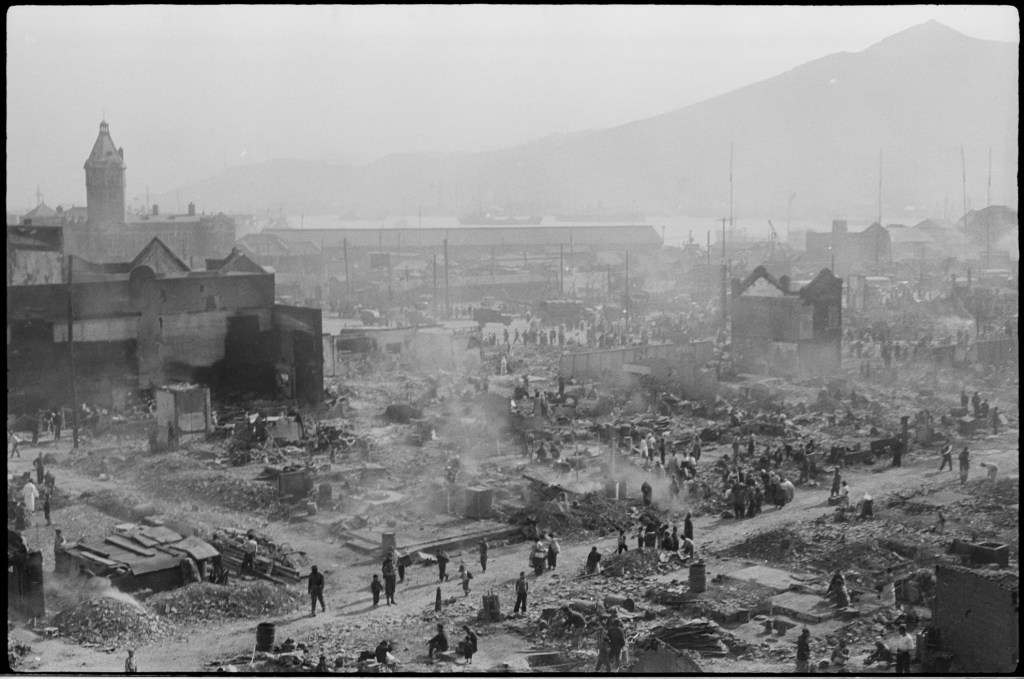
The war also profoundly shaped the Korean economy, its politics, and its culture. It is estimated that about 3 million Koreans — about one-tenth of the total population — were killed, wounded, or went missing during the three years of the conflict. Another roughly 5 million were displaced, fleeing north or south, with many becoming separated from family members and in some cases never to see them again. Many of those who fled south found relative safety in the southeast port city of Pusan, known today as Busan, in the region that was the only part of the country not captured by North Korean forces.Â
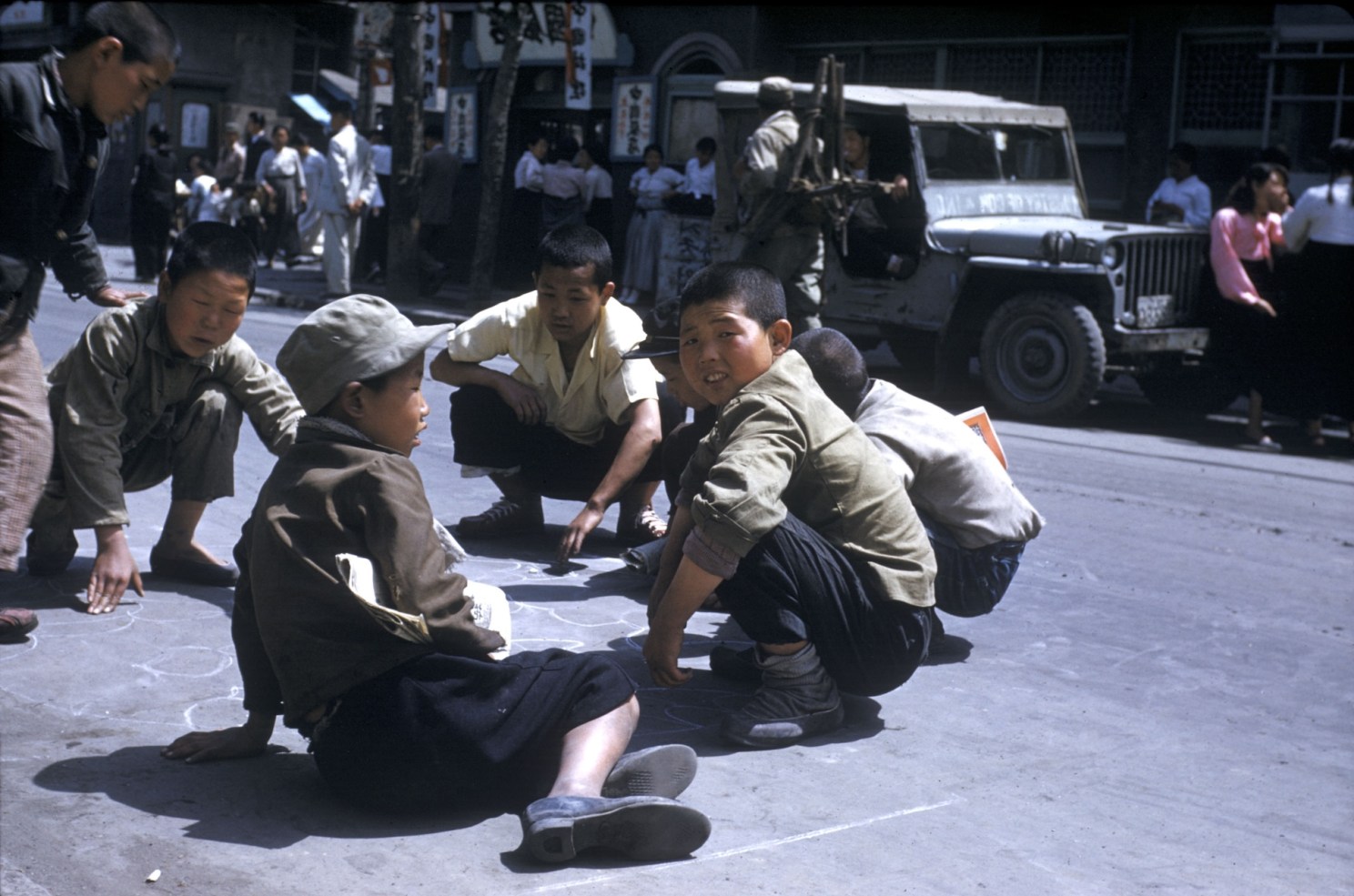
Boys play in the street with an Army jeep visible in the background.
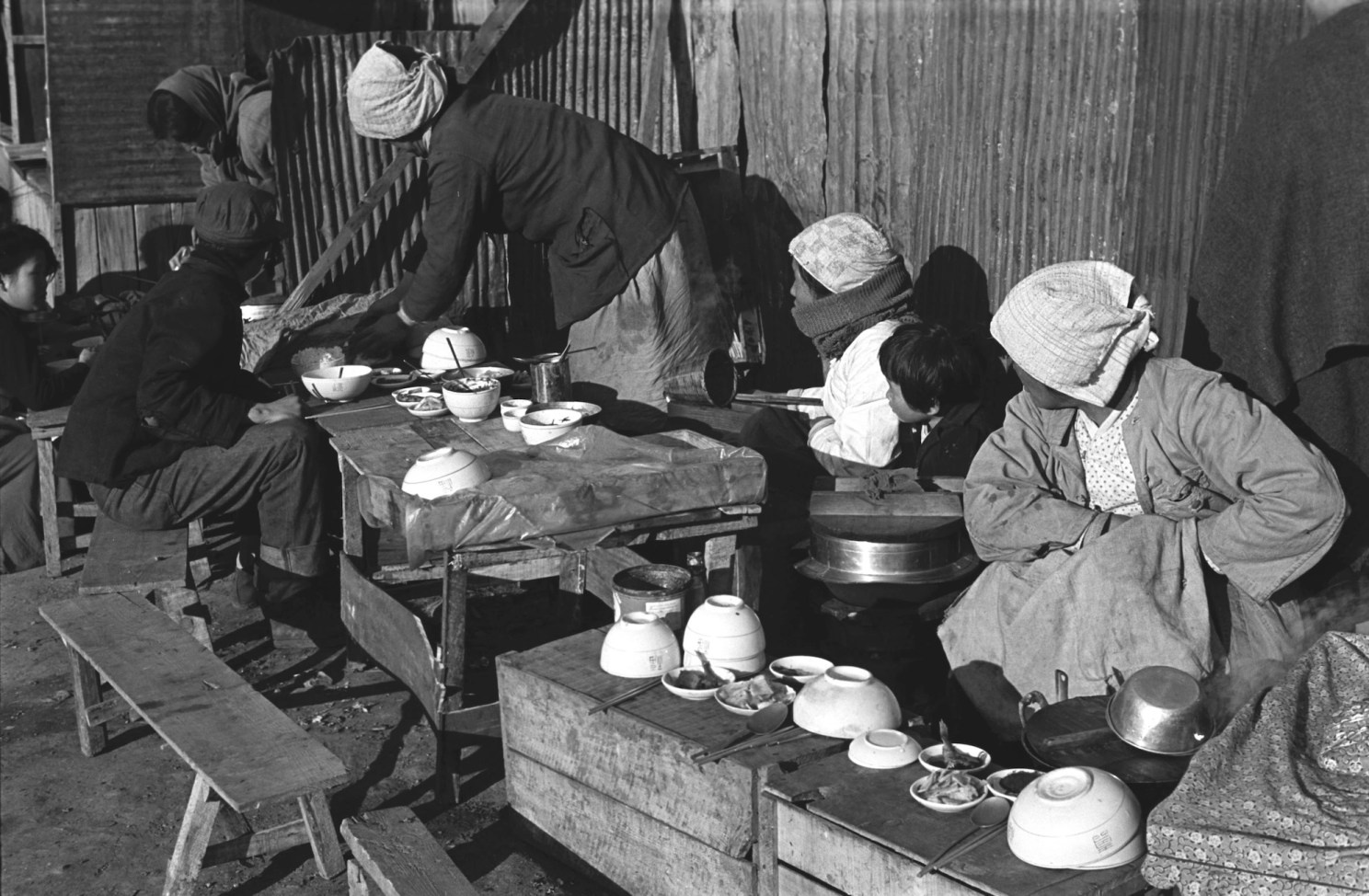
People at a street restaurant.
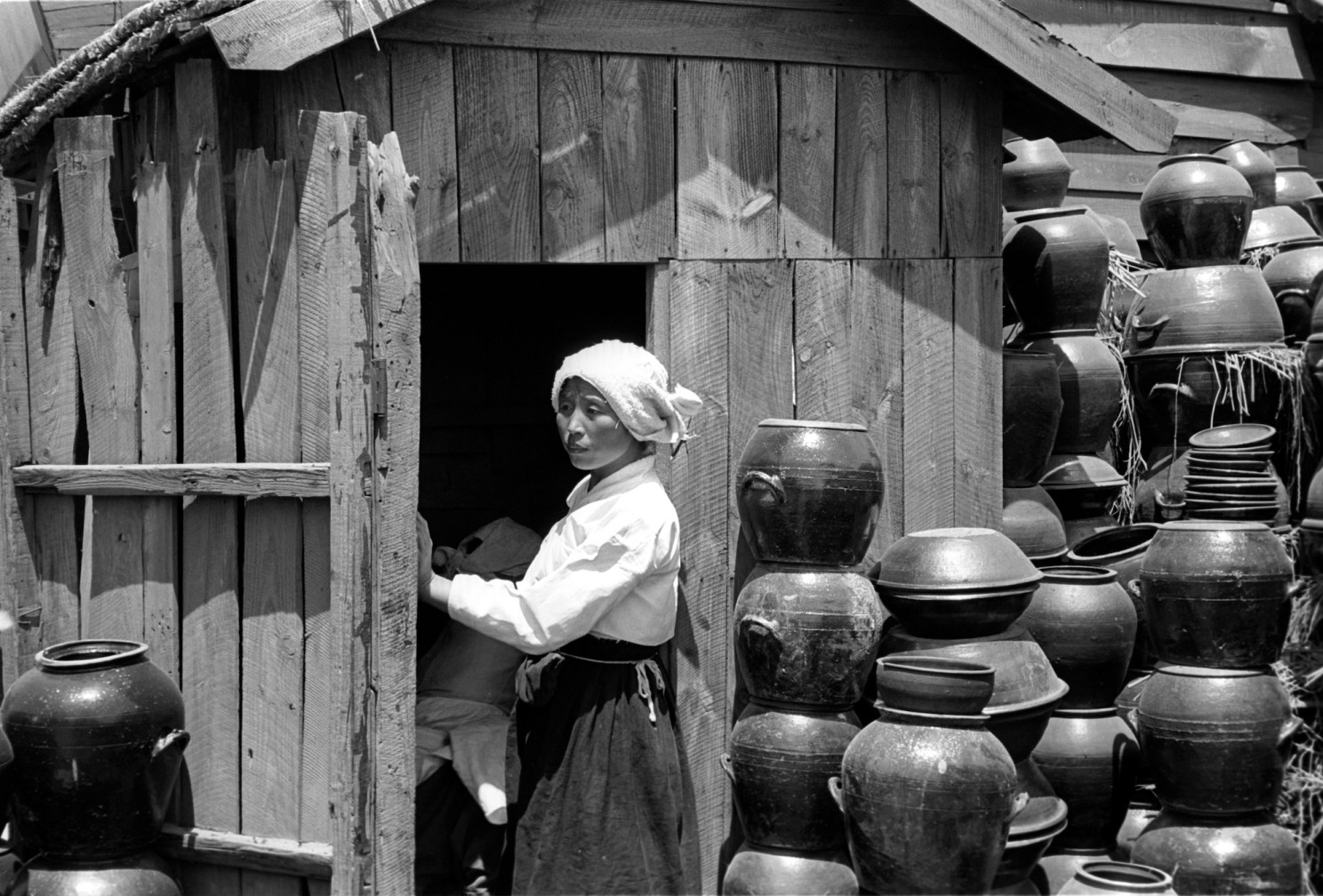
A woman stands in a doorway framed by piles of jars.
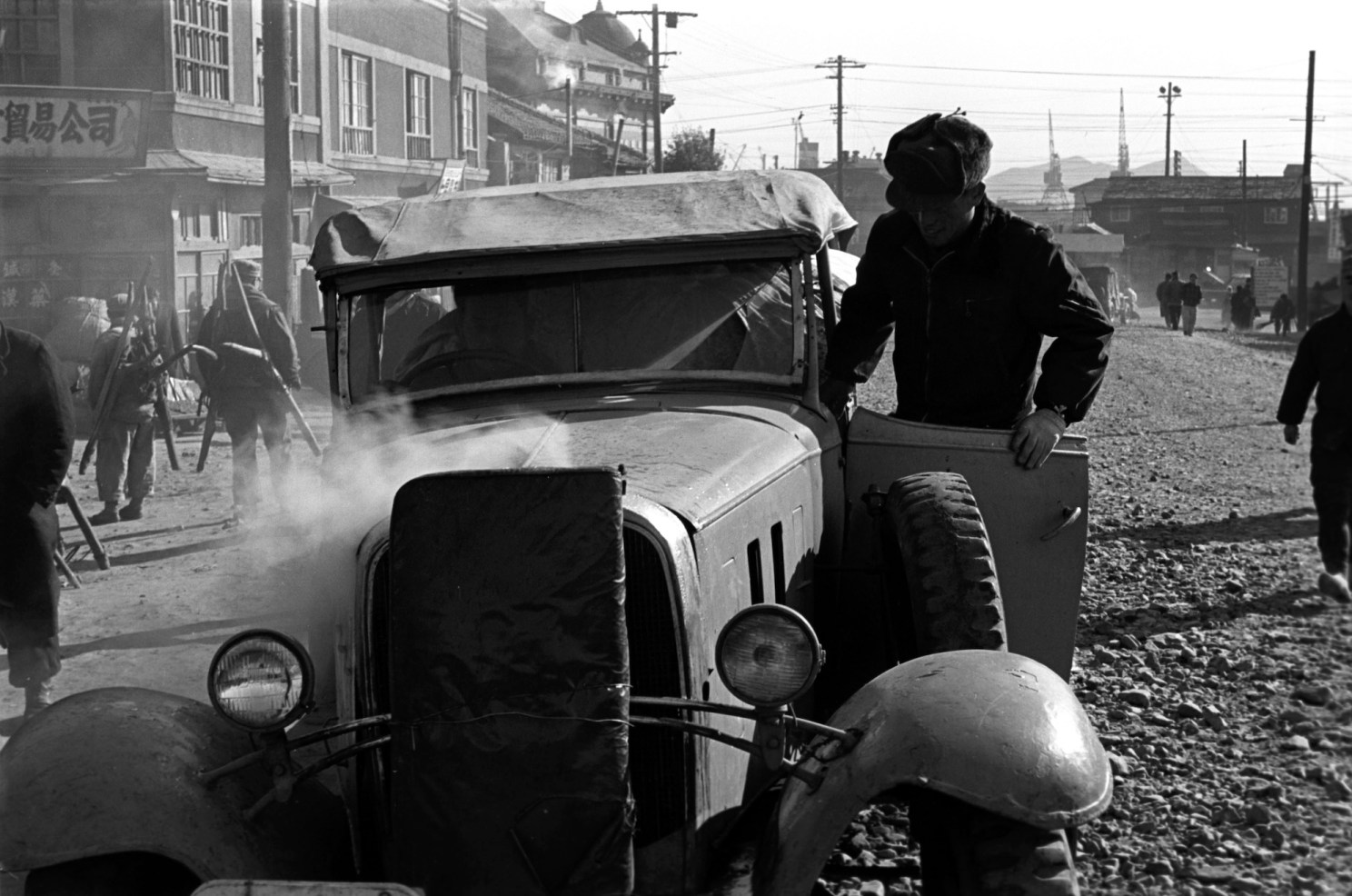
A man inspects his car on a Pusan street.
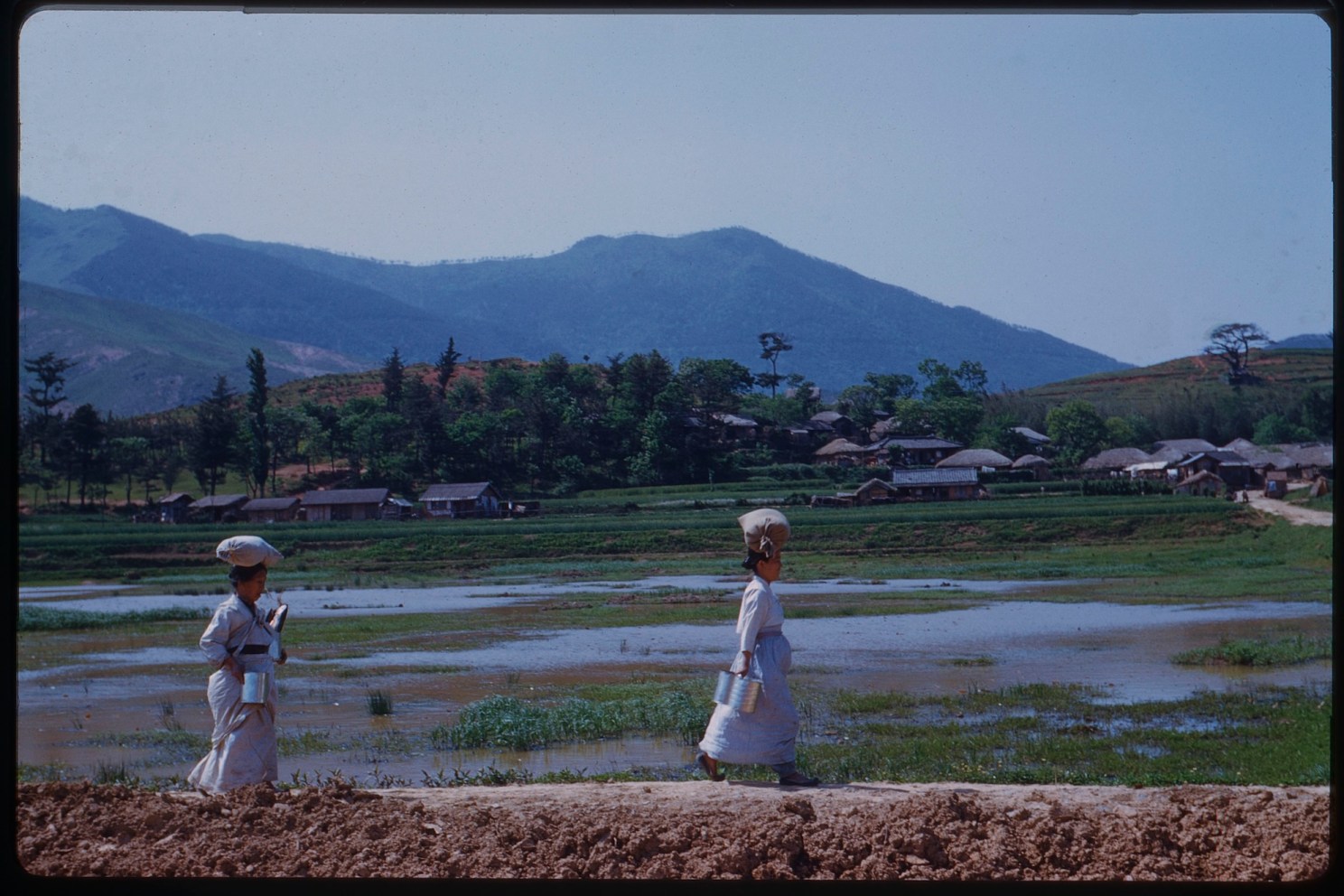
Marshutz traveled to the outskirts of Pusan to photograph vestiges of traditional life before the war.
Conditions in Pusan's improvised refugee communities were cramped and impoverished, but Koreans went about life there as best they could, often without much privacy. The conditions allowed Marshutz, who was an outsider and who spoke no Korean, to access intimate moments of their lives.Â
The photos, Barbash said, “were not about what you really think about when you think about war. Instead, they were about the collateral damage of war.â€
Born in Los Angeles in 1929, Marshutz was best known as a Hollywood photographer, capturing iconic images of the luminaries of the mid-20th century: Elvis Presley, Marilyn Monroe, Paul Newman. But he honed his skills as an Army photographer in Pusan. When he wasn't performing his official duties photographing Brig. Gen. Richard S. Whitcomb, Marshutz wandered the streets, capturing the port city in a remarkable moment of transition. He was also drawn to scenes of children, and to the fast integration of American culture and imports into Korean life.Â
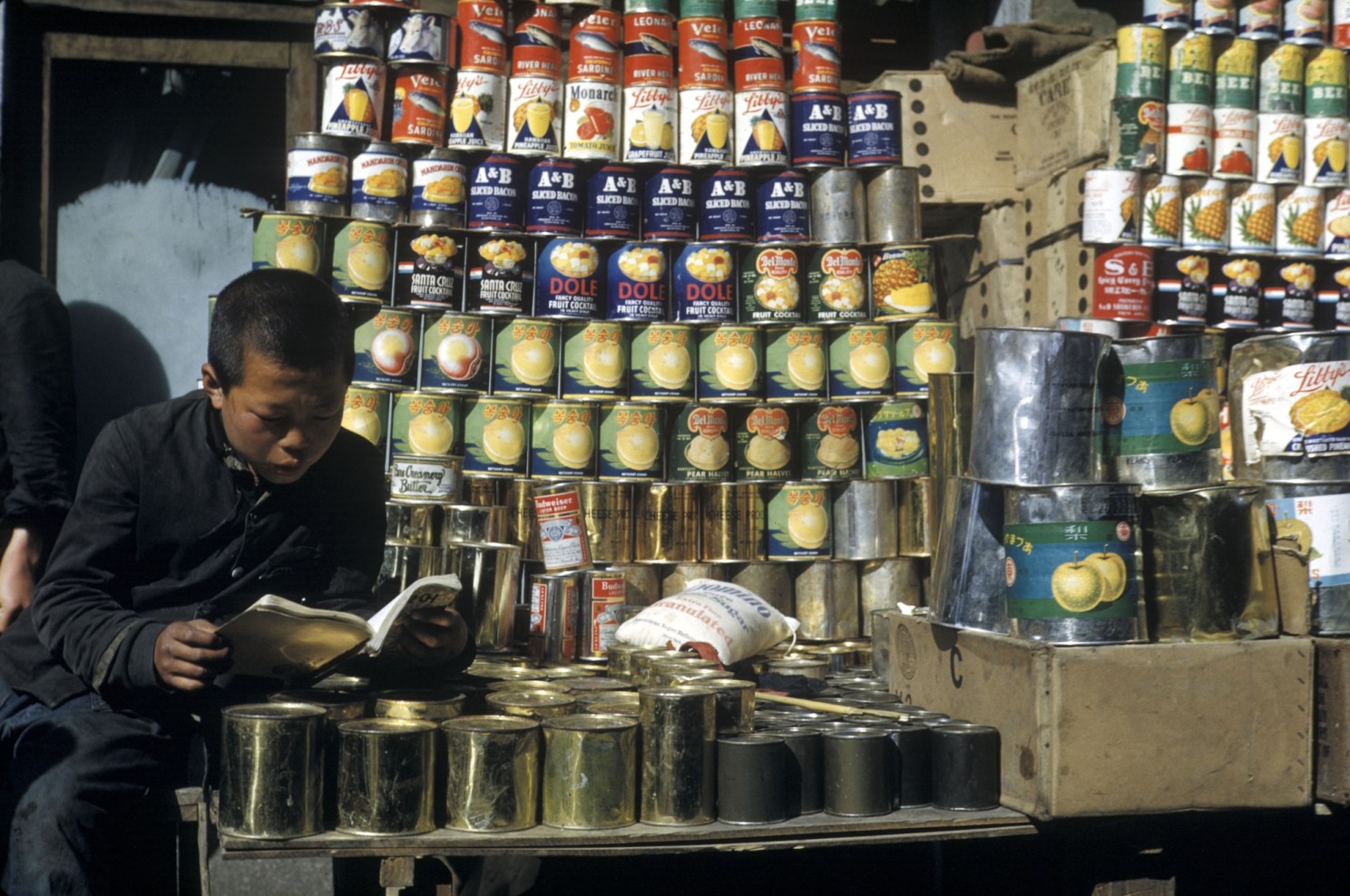
A boy reads a language textbook in front of a pile of canned goods.
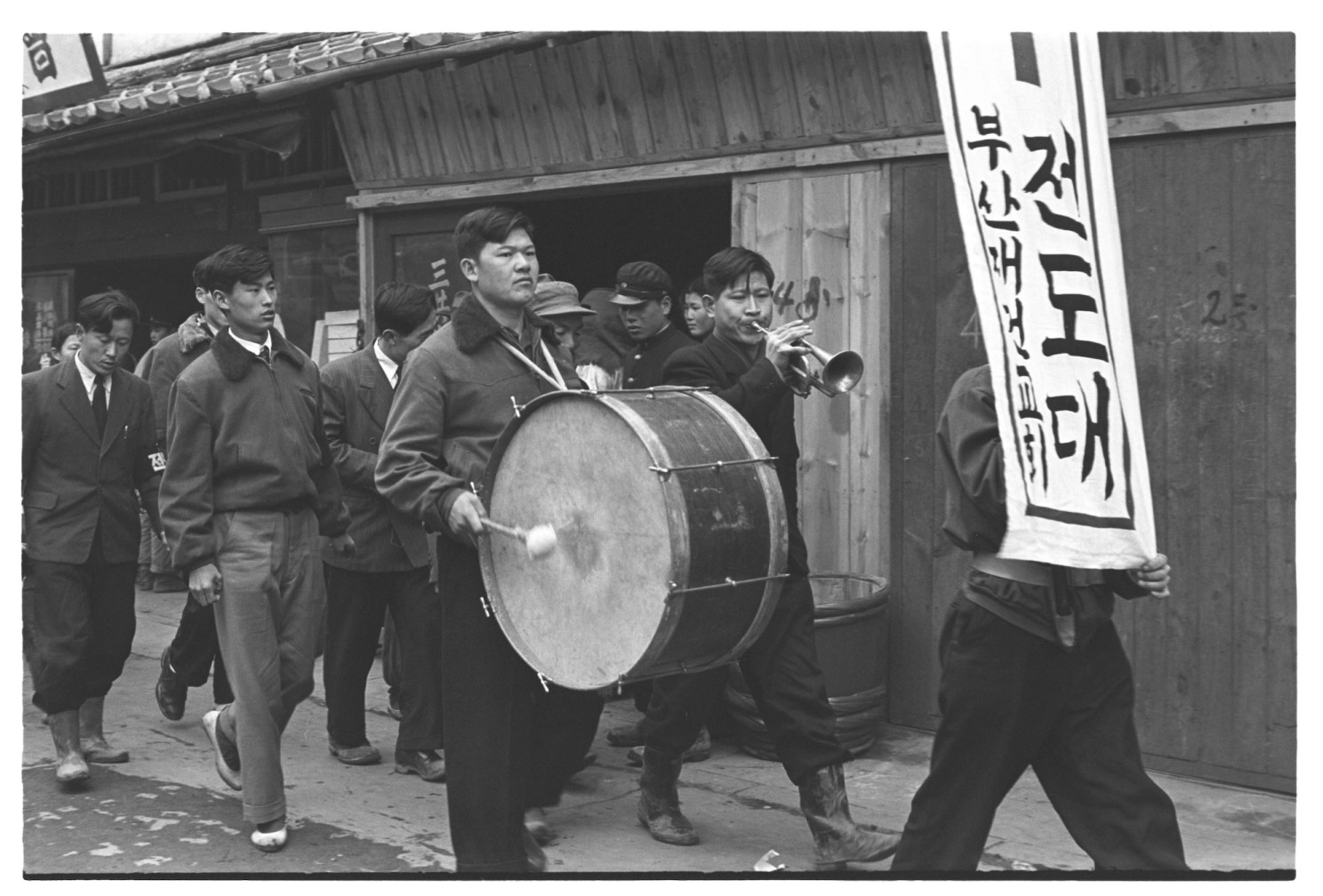
A Korean Christian Evangelist band marches down the street. The banner reads: “Evangelistic Band: the Pusan Reconstruction Church.â€
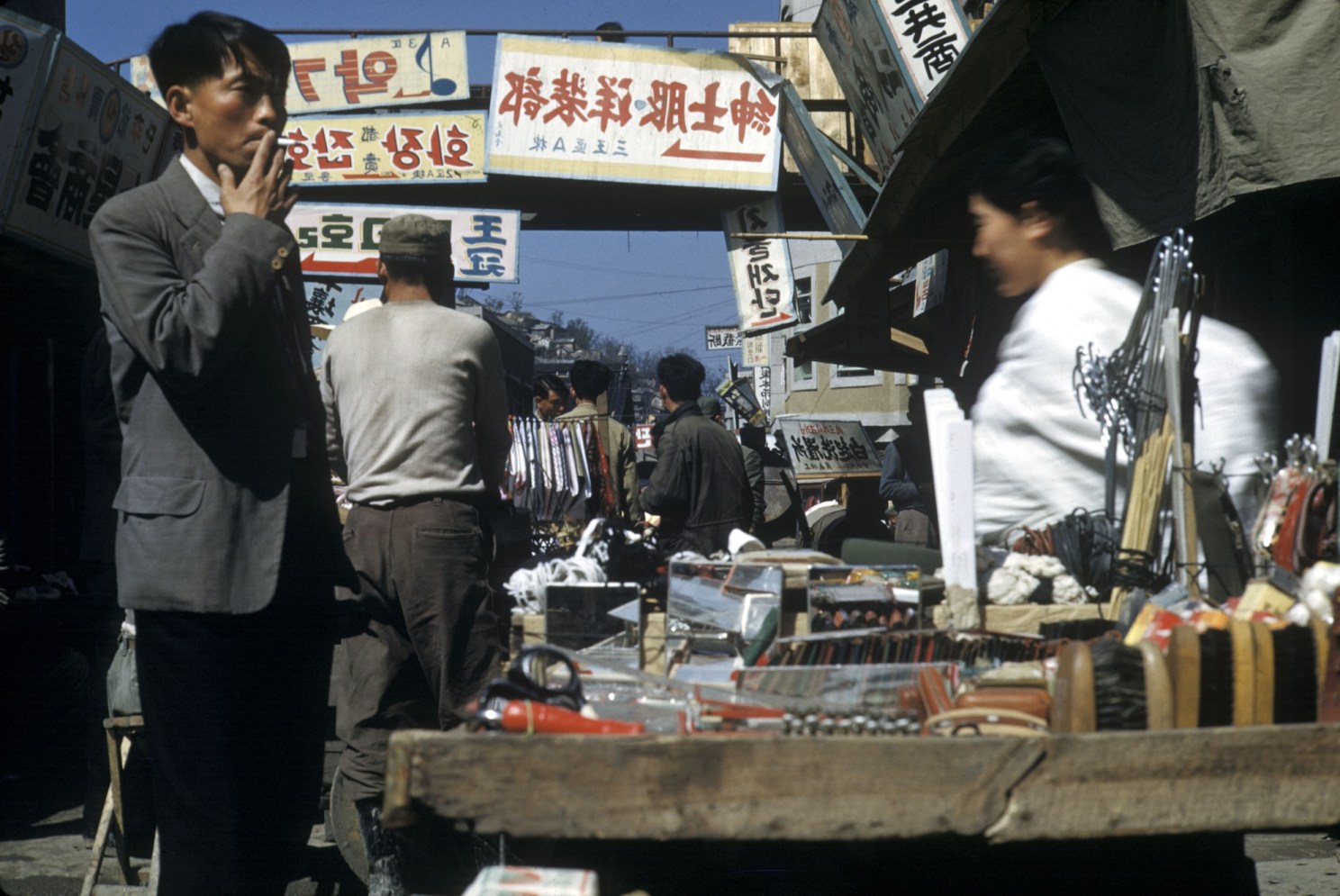
Marshutz did not speak or read Korean, so he largely photographed Korean-language signs as graphic elements, Barbash said.
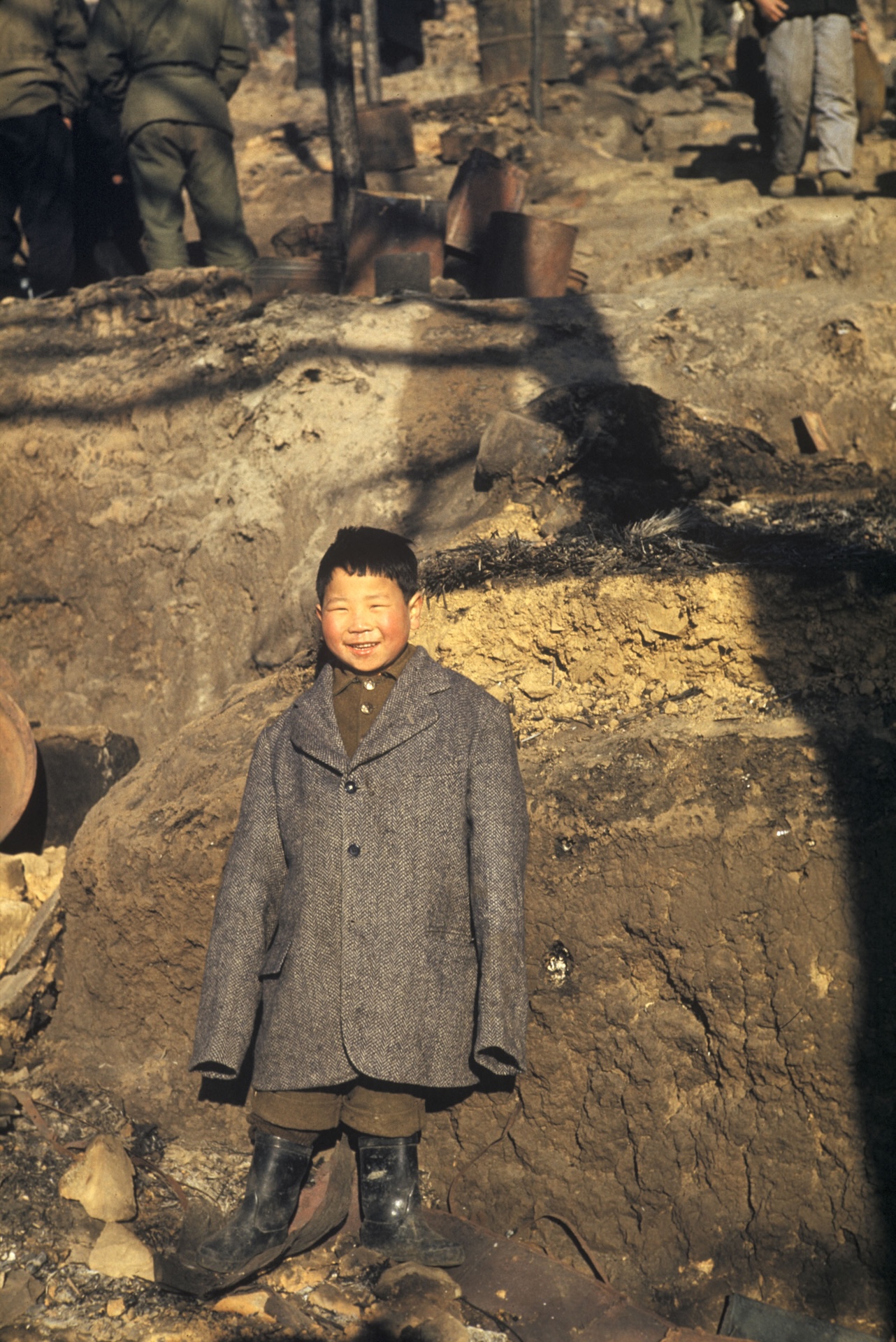
Marshutz sought out the joy and humor of children, which persisted even amid the chaos of war and reconstruction.
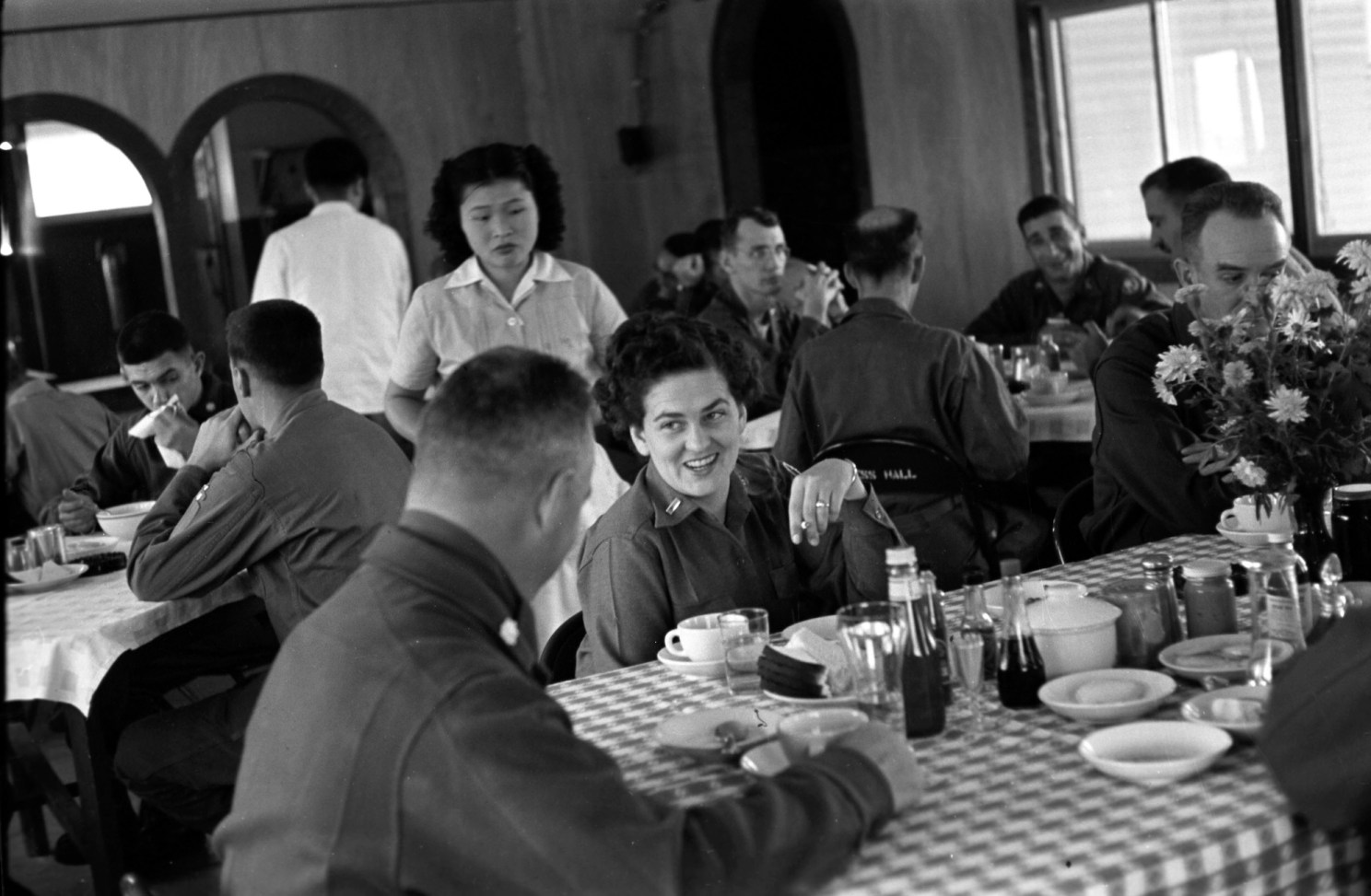
Americans and Koreans mingled on army bases. Here, Capt. Martha A. Voyles, Gen. Whitcomb's aide-de-camp, talks with a colleague.
Barbash and Kim noted that Marshutz, who died in 2007, was working at a time when photographers were less likely to get permission to photograph their subjects or take down their names. They hope the book, which is available in English and Korean, helps reunite people with photos of their relatives or even of themselves.
“The photos reveal a country that is just beginning to recover from the ravages of war,†said Kim, who holds a Ph.D. from the Department of East Asian Languages and Civilizations at Harvard and is now a professor of history at the University of Central Missouri. “There are heartbreaking scenes of refugee camps and orphan shelters. But in spite of the bleak circumstances of wartime Pusan, there's a vitality, an energy that comes through the photos. From the hustle and bustle of the markets to the children at school and at play, Korean daily life resumed as the war drew to a close. And Roger Marshutz, with his camera, captured these images of vitality and hope for the future in a way that no words ever could.â€